News


0102030405
Full-Bore Evolution: Four Game-Changing Advances Propelling the Modern Gate Valve into a New Era of Flow Control
2025-08-22
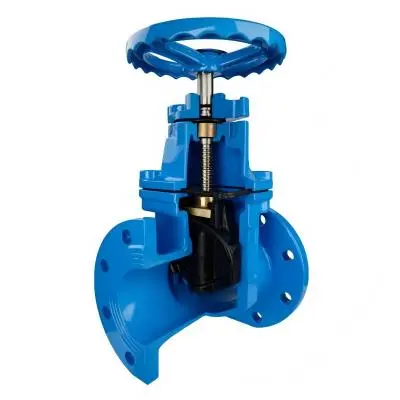
In an industry where incremental tweaks have long been the norm, the humble gate valve is suddenly grabbing headlines. Long regarded as the reliable but unspectacular workhorse of isolation duty, today’s next-generation gate valve is rewriting playbooks across oil-and-gas, water, hydrogen, and district-cooling networks. From metallurgical breakthroughs to plug-and-play digital ecosystems, four distinct advances are converging to make the gate valve faster, safer, and smarter than ever before. Below, we unpack each advance in detail.
- Cryogenic-Ready Super-Austenitic Trim
Traditional carbon-steel gate valves struggle at minus 196 °C, where thermal contraction invites seat leakage and stem seizure. A new class of super-austenitic stainless-steel—fortified with 6 % molybdenum and laser-clad tungsten-carbide overlays—now eliminates those failure modes. Third-party cryogenic testing on a 900-pound-class, 12-inch unit recorded zero bubble leakage after 500 thermal shock cycles between ambient and liquid-nitrogen temperatures. Operators of LNG loading arms and liquid-hydrogen refuelling skids are already specifying the trim as a drop-in replacement for legacy castings, citing an estimated 30 % reduction in fugitive emissions and a fourfold extension of service intervals. - Zero-Cavity, Self-Draining Body Geometry
Conventional wedge designs trap product in the bonnet cavity, creating contamination pockets and complicating pigging procedures. A patent-expired, zero-cavity body profile—milled from a single forging—now channels every last millilitre of media toward the downstream flange, allowing full-bore pigging without Valve removal. In a Canadian oil-sands diluent line, this geometry eliminated the need for monthly nitrogen purges, saving over 1,000 cubic metres of inert gas per kilometre per month. Water utilities are equally enthused: operators report the ability to pig potable-water mains without opening auxiliary drains, reducing public disruption and chlorine-loss events. - Integrated IoT Stem Analytics
A peel-and-stick inductive sensor ring, factory-calibrated to each stem’s magnetic signature, now delivers thrust, torque, and vibration data via LoRaWAN every thirty seconds. Cloud analytics translate these streams into actionable insights: rising torque trends predict packing degradation weeks in advance, while transient thrust spikes flag potential upstream debris. Early adopters in a North Sea platform cluster cut unplanned valve maintenance by 42 % in the first twelve months, translating to an estimated USD 2.3 million in deferred shutdown costs. Battery life exceeds eight years, and the sensor ring retrofits to any rising-stem gate valve without hot-work permits. - Quarter-Turn Electric Actuator with Mechanical Fail-Safe
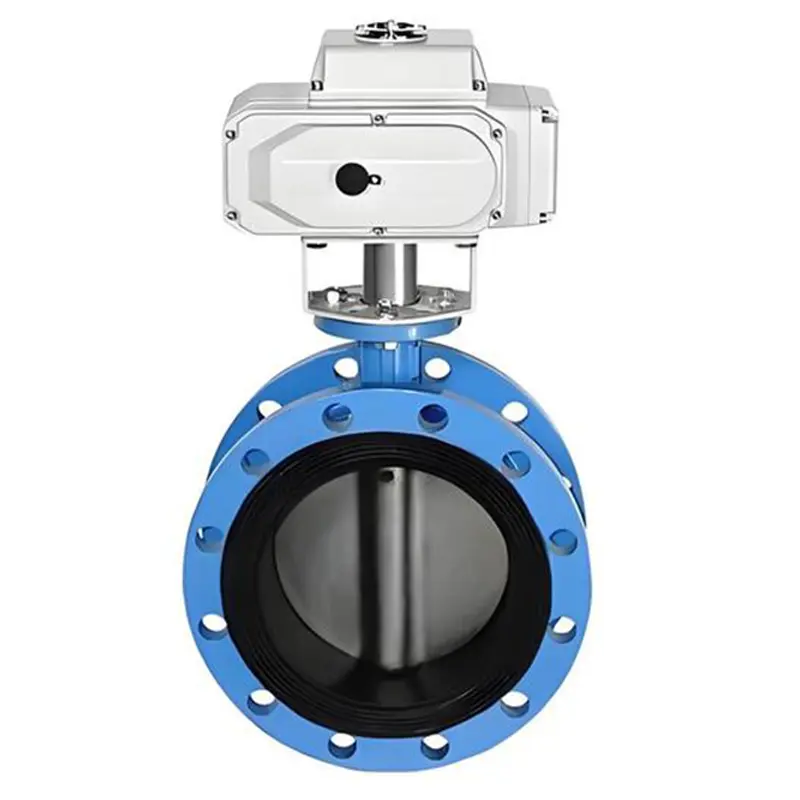
The perennial drawback of gate valves has been the slow, multi-turn stroke. A new quarter-turn actuator—pairing a planetary roller-screw with a compact brushless DC motor—delivers full-stroke operation in under three seconds while drawing less than 60 W. Should power or signal fail, a dual-spring mechanical fail-safe snaps the valve to a pre-selected position without battery backup. During a recent emergency-shutdown drill on a subsea chemical-injection skid, the actuator closed a 6-inch, 2,500-pound gate valve in 2.7 seconds, outperforming adjacent ball valves and earning approval from classification societies for high-integrity protection systems (HIPPS). Operators also note the unit’s modulating capability—opening to any intermediate position for throttling—an ability once considered heresy for wedge-type valves.
Collectively, these four advances signal more than iterative improvement; they mark a paradigm shift in how engineers specify, operate, and trust gate valves. From cryogenic frontiers to data-rich smart plants, the gate valve is no longer the silent sentinel at the edge of the P&ID—it is stepping forward as the intelligent, resilient cornerstone of modern flow control.