

0102030405


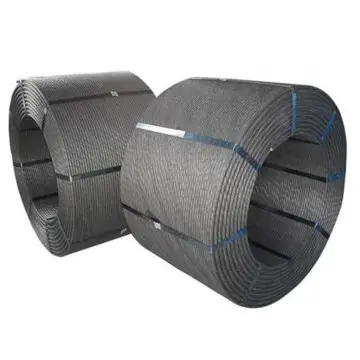
High elasticity liquid coil material (Ironway-BW123HE)
High elasticity liquid coil materials are at the forefront of flexible electronics, offering a unique combination of properties that make them ideal for a range of applications, from soft robotics to wearable devices. These materials are characterized by their exceptional flexibility, high conductivity, and the ability to withstand large-scale deformations without compromising performance.
Core features of high elasticity liquid coil materials include:
1. Flexibility and Elasticity: High elasticity liquid coil materials, such as those based on eutectic Gallium Indium (eGaIn), can be integrated into flexible silicone substrates to form intricate, three-dimensional multilayer coils without the risk of short-circuiting. These coils maintain their functionality even when subjected to complex deformations and extreme elongations, with some materials able to sustain deformations up to 560%.
2. Conductivity: Liquid metal coils, formed by winding a section of liquid metal, can act as both resistors and inductors in a circuit, demonstrating large conductivity and non-toxicity.
3. Structural Integrity: These materials can achieve a minimum insulation thickness of 0.1 mm for various wire diameters, resulting in wire diameter to corresponding insulation ratios that surpass the densities previously reported for liquid metal coils.
4. Environmental Sensing: High elasticity liquid coil materials can be integrated into units that encompass a range of environmental sensing capabilities, including pressure, temperature, distance sensing, and signal interaction.
5. Actuation and Soft Robotics: Due to their ability to respond to electric fields, these materials can be used in soft actuation, with the potential to enhance the functionality of soft grippers, land-running robots, and water-swimming robots.
6. Integration with Soft Materials: The addition of liquid metal rarely affects the flexibility of soft materials due to its very low Young's modulus, which enables further applications in soft devices.
7. Fabrication Methods: High elasticity liquid coil materials can be fabricated using various methods, including the injection of liquid metal into coil-shaped microchannels made by coiled silicone tubes or fibers, or through soft lithography.
8. Applications: These materials have a wide range of applications, including human-computer interaction, soft robotics, wearable devices, implantable devices, and medical instruments.

In summary, high elasticity liquid coil materials offer a versatile solution for the next generation of flexible and stretchable electronics, combining the benefits of high conductivity with the flexibility required for dynamic and deformable applications.
Leave Your Message
description2